
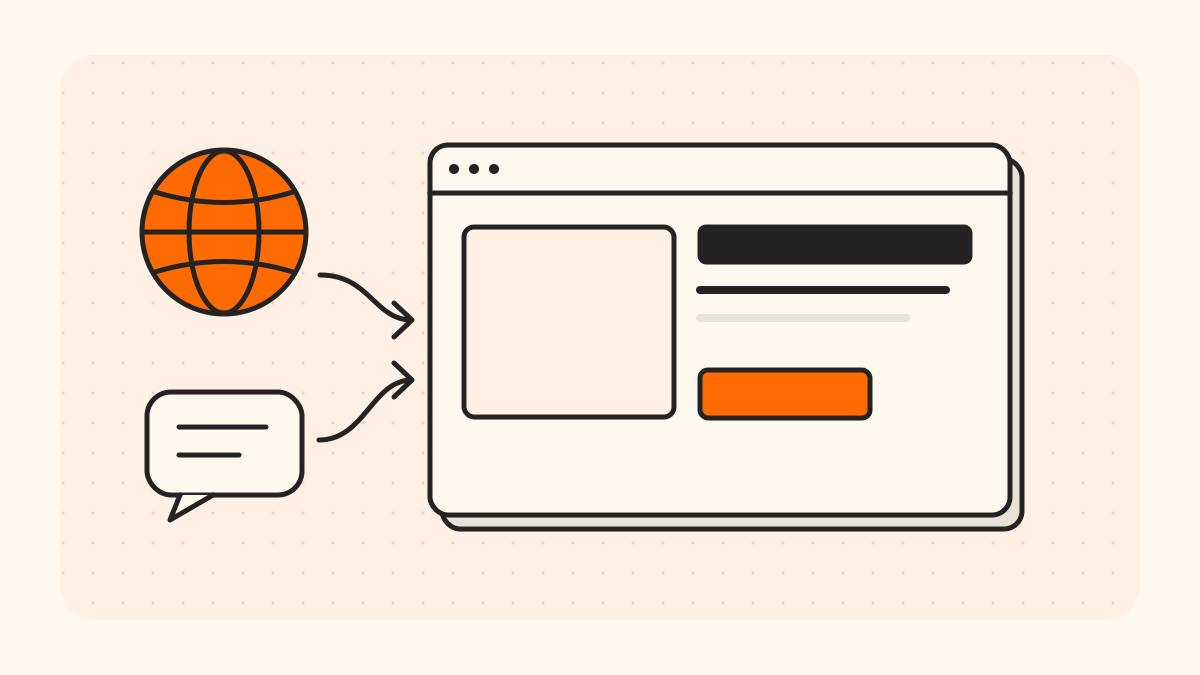
For many small businesses, a website is worth having even when Facebook and recommendations already bring in work. It gives people one clear place to check what you do, where you work and how to enquire. Keep using the channels that work: your website can help customers take the next step after they discover you.
That does not mean every business needs a website immediately. If you are fully booked, your details are easy to find and customers can contact you without difficulty, it may be reasonable to wait. The useful question is whether a website would solve a problem for your customers or your working day.
A recommendation starts the conversation
Imagine a neighbour recommends your joinery business. The person hearing about you still needs to know whether you fit kitchens, take on smaller repairs or travel to their part of Scotland.
That recommendation has given them a reason to consider you. A website can give them the information to act on it.
This is a hypothetical example, but you can test the same journey in your own business. Ask someone unfamiliar with your Facebook page to find:
- The specific service they need.
- Your location or service area.
- A relevant example of your work.
- The right way to ask about price or availability.
Watch where they hesitate. If they need to scroll through old posts or message you for basic details, those are useful jobs for a website to take on. If they find everything easily, you have a stronger basis for deciding what a website would add.
Give Facebook and your website different jobs
Facebook can be useful for local conversations, recent work, offers and keeping in touch with followers. A website lets you organise the information someone needs when they are ready to consider your service.
| Customer’s task | A useful role for Facebook | A useful role for your website |
|---|---|---|
| Discover the business | Shared posts, local conversations and recommendations | A destination linked from profiles, referrals and other listings |
| See what you have been doing | Recent photos and updates | A selected set of relevant work examples |
| Understand your offer | Introduce a service in a post | Explain services, coverage, limitations and the enquiry process together |
| Take the next step | Start a Messenger conversation if you use it | Offer a clear phone, email, form or existing booking link |
For a shop, that could mean posting a new window display on Facebook while keeping directions and opening information on the website. For a salon, social posts can show recent styles while the website explains treatments and links to the booking service already in use.
Keep shared facts consistent. A website with old hours and a Facebook page with different ones creates another question for the customer.
Make it easier to assess your business
A website gives you room to explain the things a customer cannot judge from a business name or a photo alone: what a service includes, who it suits, what affects the price and what happens after an enquiry.
Useful detail gives people something concrete to assess. For example, a tradesperson could describe the work shown in a project photograph and explain which parts they completed. A service business could explain what a first conversation covers. Use genuine qualifications, reviews and work examples where you can substantiate them.
Our website work and example designs show ways to bring service information, business identity and enquiry routes together. The fictional demos illustrate design choices; they are not client results. A real business should use its own accurate service details and genuine work examples.
More control brings responsibilities
With a website, you can choose the page structure, wording and contact options around your business. You also have a separate address to share on a business card, in a message or after a recommendation, rather than relying on one social platform as the only route to your information.
That control depends on your arrangements. Before paying for a website, check whose account holds the domain name, what files or access you receive, whether you can move hosting and how updates will work. A domain is the website’s address; hosting is the service that makes its files available online.
You still need to renew the domain, pay for hosting and keep important information accurate. A website is another business asset to look after, not a way to avoid maintenance altogether.
Will a website bring customers from Google?
A website can give search engines pages about your services to discover and understand. Publishing one does not automatically bring visitors or enquiries. Google’s guidance makes clear that inclusion in its search index is not guaranteed, and no technique automatically ranks a site first.
Start with accurate descriptions of what you offer and where you work. A Glasgow business serving customers across Scotland should explain its real coverage, including any limits, rather than listing places it cannot reasonably serve.
A website is also only one part of local search. Google Business Profile provides business information in Maps and Search; Google recommends keeping that information complete and current. Its local results consider relevance, distance and prominence.
The first useful goal for your site may be helping people who already know your name. Our guide to helping local customers find your business explains how your website and business information work together in local search.
Start with the smallest website that answers the questions
A first website can be straightforward. A brochure website explains your business and helps someone enquire; it does not need to take payments or manage customer accounts.
Start with:
- What you do and who you help. Put a plain description near the top.
- Where you work or welcome customers. Include relevant coverage, visiting details or hours.
- What the service involves. Explain the main options and what affects a quote if there is no fixed price.
- Evidence people can assess. Use genuine photographs, accurate work descriptions and permitted reviews.
- One clear next step. Tell people how to enquire and what information to send.
A one-page site can bring a focused offer together. Three pages can separate an introduction, service information and contact details. Five pages can give distinct services or work examples their own space. Choose the structure around the information, rather than finding text to fill a package.
Our guides to what customers need from your website and choosing a one-, three- or five-page website explain those decisions in more detail.
Keep the first enquiry manageable. A name, a way to reply and a short description may be enough to begin a conversation. Send a test enquiry and confirm it reaches the business. If you already use an external booking service, a clear link to it may be all you need; building booking software is a separate requirement.
Decide whether now is the right time
A website is worth considering when you repeatedly answer the same questions, customers struggle to understand your services, or referrals need a better place to check your work. It can also help when you want a consistent address to share across social profiles and printed materials.
Waiting can make sense if your offer is still changing, you cannot yet supply accurate information, or there is no clear customer problem for the website to solve. You do not need to manufacture a growth target to justify one or buy one simply because someone says every serious business must.
When comparing options, look at both the build price and the ongoing costs. Ask what hosting, updates, domain renewals and extra features involve. A low initial price is only useful if the scope meets your needs and you understand the continuing commitment.
WeegieWeb offers one-, three- and five-page websites for small businesses in Glasgow and across Scotland. Compare the website packages and ongoing costs, or tell us about your first website. Start with what you do and the questions customers ask; that is enough to begin working out a useful structure.